
Two hoodies can have the same weight, the same colour and the same cut, and still feel completely different in the hand. The reason is usually the fabric construction: French terry, fleece or loopback. If you are planning hoodies, sweats, joggers or a tracksuit for your brand, knowing the difference helps you choose the right fabric for your design, your season and your customer, and write it clearly into your tech pack.
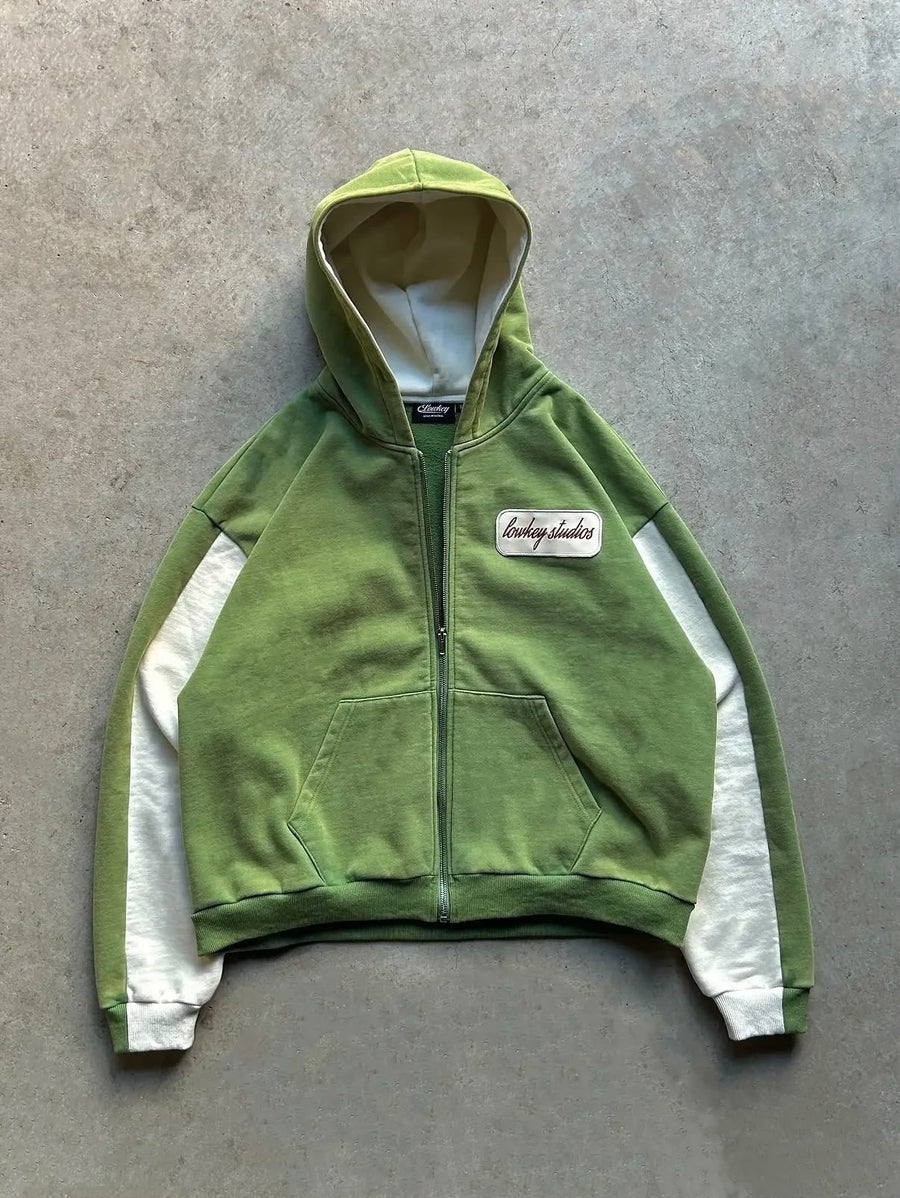
All three start as a knit
French terry, fleece and loopback are all knitted fabrics, most often made from cotton or a cotton and polyester blend. On the outside they usually look similar: a smooth, flat face that works well for prints and embroidery. The real difference is on the inside, the side that touches your skin.
French terry
French terry has small loops of yarn on the inside. The loops are left as they are, not brushed. That gives the fabric a light, textured feel and lets air move through it.
- Feel: soft, dry and breathable.
- Good for: spring and summer hoodies, crewnecks, shorts and layering pieces.
- Keep in mind: at a similar weight it is less warm than fleece.
Fleece
Fleece starts with loops on the inside too, but they are brushed. Brushing raises the fibres into a fluffy, soft surface that traps air, which is why fleece feels warm and cosy.
- Feel: very soft and warm on the inside.
- Good for: classic hoodies and sweatpants for autumn and winter.
- Keep in mind: the brushed side can shed a little lint in the first washes, and its warmth makes it less ideal for warm months.
Loopback
Loopback is a name many brands use for French terry, especially heavier versions where the loops on the inside are clearly visible. Like French terry, it is not brushed. In heavier weights it gives a hoodie structure and a clean, slightly vintage look, which is why it is popular in premium streetwear.
- Feel: firm, textured and substantial.
- Good for: heavyweight, boxy hoodies, sweats and sets that should hold their shape.
- Keep in mind: the term is used loosely, so always confirm the weight and the inside finish, not only the name.
French terry vs. fleece vs. loopback at a glance
| Fabric | Inside | Feel | Warmth | Best for |
|---|---|---|---|---|
| French terry | Small, unbrushed loops | Light, breathable | Medium | Spring, summer, layering |
| Fleece | Brushed, fluffy surface | Very soft, cosy | High | Autumn, winter, classic hoodies |
| Loopback | Visible unbrushed loops, often heavier | Firm, structured | Medium to high, depending on weight | Heavyweight streetwear, boxy fits |
Fabric and weight work together
The construction tells you how a fabric feels. The weight, measured in GSM, tells you how heavy it is. You need both. A heavy French terry can feel more substantial than a light fleece, and a light loopback will not give you the structure people expect from the name. Our hoodies, sweats, zip sets and tracksuits go up to 480 GSM, our heavy pants up to 465 GSM. If you are unsure about the weight, read GSM explained: how heavy should a hoodie be?
What it means for prints and embroidery
Because the outside face of all three fabrics is smooth, embroidery, 3D embroidery, puff print, screen print, DTF, DTG and rhinestones can be used on each of them. A stable, heavier fabric carries dense embroidery and large prints better than a light one. The best finish depends on your artwork, the fabric and the quantity, and we confirm it with your quote. Our guide Embroidery vs. screen print vs. puff print vs. DTF explains each technique.
How to choose the right fabric for your brand
- Think about the season. Fleece for cold months, French terry for warmer ones, loopback when structure matters most.
- Decide on the look. A boxy, structured hoodie needs a heavier, firmer fabric. A relaxed, soft piece works well with lighter weights.
- Keep sets consistent. For a tracksuit or matching set, use the same fabric for top and bottom, so both pieces look and wear like one outfit.
- Write it in your tech pack. Name the material, the construction, the inside finish and the weight, for example: 100% cotton, French terry, unbrushed, 400 GSM. Our free tech pack template has a field for it.
- Feel it on a sample. Photos cannot show hand feel. A sample is the most reliable way to judge fabric, weight and fit before your production run.
Hoodie fabrics with NXT LEVEL
- Sample first. Every new product starts with a sample, so you feel the fabric before you order. Half of the sample cost is credited on your bulk order. More on our samples page.
- Quantity. You can start from 30 pieces per style, usually 30 to 50 depending on the product.
- Timeline. About 4 to 5 weeks including production for typical orders.
- Payment and approval. 50% to start production, 50% after you have approved photos and video of your finished order.
- Delivery. To the EU, UK and USA we deliver DDP: one final price including shipping, customs and duties.
- Production. Made in Sialkot, Pakistan, and managed from Germany, with labels, hangtags and packaging from one source.
More about our hoodie and tracksuit production. We work with everyone from startups to big brands.
Your next step
Not sure if your design needs French terry, fleece or loopback? Send us your design, a sketch or a reference photo on WhatsApp, together with the product and an approximate quantity. We suggest the fabric and weight that fit your idea, tell you what is possible and what it costs, and start with a sample, so you can feel the difference before your production run.